
Cookies help us deliver our services. By using our services, you agree to our use of cookies.
Author List
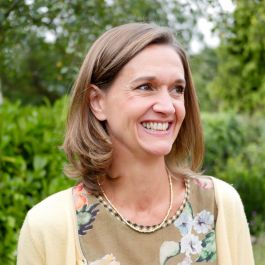
Leah Crawford
Leah Crawford has 15 years’ experience as a local authority English inspector and adviser, working across both the primary and secondary phases, and now leads Thinktalk education consultancy. She is a tutor for King’s College London’s Let’s Think in English cognitive acceleration programme, is on the Wildern Partnership SCITT leadership team and is delivering the new NPQ in Leading Literacy. She has spent her career in education championing equitable and inclusive dialogic teaching and learning.
Click here to read Leah Crawford’s blog.
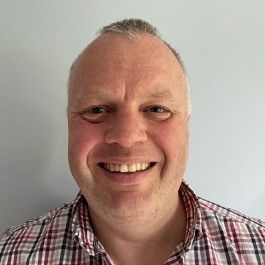
Mark Creasy
Mark Creasy is an Independent Thinking Associate and experienced primary school teacher. His contemporary and down-to-earth style of teaching has allowed him to view learning as a tool, not a rule, to ensure that his pupils are given the right to an education that suits their needs and maximises their potential for future success. Mark is also the author of Unhomework, which challenges the orthodoxies about work outside the classroom.
Read Mark's article featured in The Guardian on Tuesday April 1st 2014.
Click here to listen to Mark discussing The Great Homework Debate' on the Pivotal Podcast (from 4.30mins).
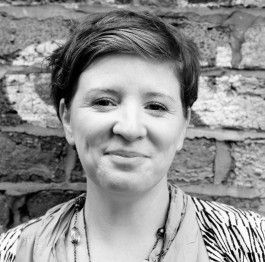
Cathy Cross
Cathy Cross trained in theatre design and has spent over 20 years working in community theatre and education. Over the last few years Cathy has combined the breadth of her experience to inform her role as a change maker, creativity consultant and professional den maker!
Andrew Curran
Dr Andrew Curran is a practising paediatric neurologist and neurobiologist who is also committed to using his extraordinary knowledge of the workings of the human brain to make a difference in the educational experience of all young people. He has been involved with Manchester University's Department of Education, developing research ideas looking at the use of emotional literacy in our classrooms. More recently he has conducted work exploring the processing of reward in the human brain. He believes passionately in the importance of understanding the individual, connecting with them emotionally and leading them into self directed learning. His book, the Little Book of Big Stuff about the Brain (published by Crown House Publishing) is recognised as one of the leading books about understanding brain based learning and the importance of emotional literacy in our classrooms and in our lives. His latest book, Get Off the Sofa is a general health book aimed at anyone from 5 ' 85 who wants to understand their health more. He is a talented and internationally recognised presenter both to live audiences and on television where he was a main presenter on BBC3's Make My Body Younger. He is an associate of Independent Thinking Ltd.
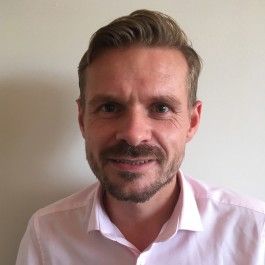
Chris Curtis
Chris Curtis is an English teacher and head of department with over a decade's experience in education. Chris is forever reflecting on which aspects of his teaching work best for his students and, as an avid reader and blogger, is a big believer in sharing practical ways to tackle difficult problems in the classroom.
Click here to read Chris Curtis' blog.
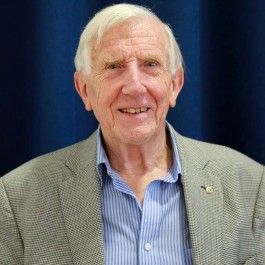
Dr David George
Dr David George was formerly Associate Director of Nene College (now the University of Northampton) and before that Dean of The Faculty of Science. He was Founder President of the National Association For Able Children and was a member of the Executive Committee of The World Council of Gifted and Talented Children. He is a consultant to the British Council and UNESCO. He has lectured both nationally and internationally on the education of the gifted and talented. He is the author of Young, Gifted and Bored; The Challenge of The Able Child; Gifted Education; Enrichment Activities for Able Children; and Making The Most of Your Abilities.
He claims to be a teacher first and foremost having taught in three schools and has a wide experience of teacher education in Liverpool and Northampton. His enthusiasm and devotion to teaching is reflected in all his courses.
David is also a keen sportsman and ran for his county and the RAF. He was Chairman of Managers at St Andrews Hospital for five years and continues as a manager. He was President of His Rotary Club and was made an Honorary Commander at RAF Croughton (USAF) in recognition of his service to the community.
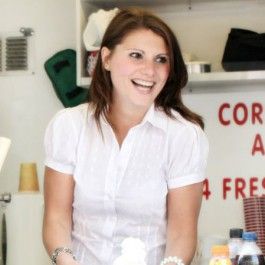
Stephanie Davies
Stephanie Davies is recognised as one of the UK's leading voices in the psychology of laughter and humour. She has over ten years' experience of developing interventions that have been applied in a wide variety of settings dealing with complex public and mental health issues and building teams in high profile organisations. She is an award-winning stand up comedian who has worked with world-renowned Dr Patch Adams exploring the relationship between health, humour, community and the arts.
Read The Independent's article featuring Stephanie's Laughology.
Laugh your way to the top - an article by The Positive.
Have you heard the one about the laughter workout? - an article from the Daily Express.
Laughology: A little funny business - an article from The Independent.
Click here to read Stephanie's blog post on the World of Learning 2020 website.

Andrew Day
Andrew has a background in language teaching and a degree in Philosophy and Social Anthropology, the combination of which have sparked his passionate curiosity into the part that language plays in the development of thinking. Having joined The Philosophy Foundation in 2009, Andrew quickly invested in their ethos, striving to encourage young people to think philosophically.
Read this article featuring Thoughtings on The Guardian Teacher Network.
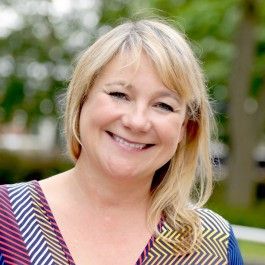
Dr. Debra Kidd
Debra Kiddtaught for 23 years in primary, secondary and higher education settings. She is the author of three previous books - Teaching: Notes from the Front Line, Becoming Mobius and Uncharted Territories - and believes more than anything else that 'the secret to great teaching is to make it matter'. Debra has a doctorate in education and co-founded and organised Northern Rocks, one of the largest annual teaching and learning conferences in the UK.
View Debra's profile in Schools Week, October 2014.
Click here to listen in on Debra's podcast with Pivotal Education on 'teaching, learning and politics'.
Click here to watch a video interview with Debra as part of The Education Foundation's series of Education Britain Conversations.

Karen Dempster
A highly experienced communication expert, Karen Dempster is co-founder of Fit2Communicate, a Fellow of the Institute of Internal Communications and a certified DISC personality profile practitioner. She is passionate about raising the standard of communication in all schools in order to support better student outcomes. Prior to 2015, Karen spent 20 years in marketing and communication roles. She is also a professional photographer and lives in Surrey with her husband, son and collection of pets.
Click here to read Karen Dempster’s blog.
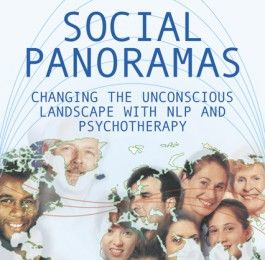
Lucas Derks
Lucas Derks has worked as a psychotherapist and coach for twenty years, focusing on social cognition and relational issues.
Read more
Ian Devonshire
Dr Ian Devonshire is a neuroscientist and lecturer who has spearheaded a range of innovative, inter-disciplinary research projects involving universities, schools, private companies, charities and the government. Ian has worked in research laboratories at the Universities of Oxford and Sheffield and is currently based at Nottingham University Medical School whilst also holding an associate lectureship at the Open University.
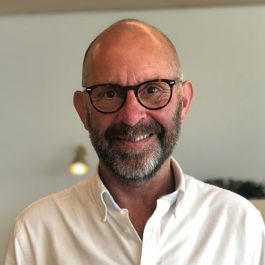
Colin Diamond, CBE
Colin Diamond, CBE has worked in education leadership for over 40 years. In this time, he has held two Director of Education posts as well as working as a Senior Civil Servant in Whitehall. In 2018, Colin took up post as Professor of Educational Leadership at the University of Birmingham. Mindful of his childhood in Liverpool, he is passionate about inclusion and social justice. He also plays in bands and supports Liverpool FC.
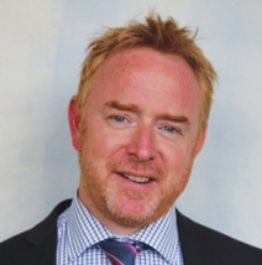
David Didau
David Didau is Senior Lead Practitioner for English at Ormiston Academies Trust and a freelance writer, blogger, speaker, trainer and author. He started his award-winning blog, The Learning Spy, in 2011 to express the constraints and irritations of ordinary teachers, detail the successes and failures within his own classroom, and synthesise his years of teaching experience through the lens of educational research and cognitive psychology. Since then he has spoken at various national conferences, has directly influenced Ofsted and has worked with the Department for Education to consider ways in which teachers' workload could be reduced.
Read this article on the 3 reasons why you need to buy The Secret of Literacy.
Read this article on David Didau's journey to becoming an edu-sceptic in Schools Week.
On this episode of the Mr Barton Maths Podcast, Craig Barton speaks to David Didau.
Click here to read David Didau’s blog.

Armando Di-Finizio
Armando Di-Finizio has, over the course of his career, taught in seven schools in deprived areas of London, Bristol and Cardiff. With a guiding conviction that every child can go on to flourish in life, Armando has successfully led three schools from being among the lowest performing in the country to achieving outcomes well above expectations. Armando’s innovative practices have been successfully applied in the many schools he has worked with and supported over the years.
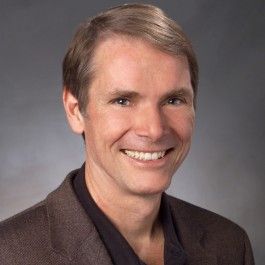
Robert Dilts
Robert Dilts has been a developer, author, trainer and consultant in the field of Neuro-Linguistic Programming (NLP) - a model of human behaviour, learning and communication - since its creation in 1975 by John Grinder and Richard Bandler. A long time student and colleague of both Grinder and Bandler, Robert also studied personally with Milton H. Erickson, M.D., and Gregory Bateson.
Robert is the principal author of Neuro-Linguistic Programming Vol. I (with John Grinder, Richard Bandler and Judith DeLozier, 1980), which serves as the standard reference text for the field, and has authored numerous other books on NLP. Changing Belief Systems with NLP (1990) and Beliefs: Pathways to Health and Well Being (with Tim Hallbom and Suzi Smith, 1990) describe his work in changing limiting beliefs and creating functional belief systems. Tools for Dreamers (with Todd Epstein and Robert W. Dilts, 1991) and Skills for the Future (with Gino Bonissone, 1993), explore the applications of NLP to managing and enhancing creativity. Effective Presentation Skills (1994) covers the key skills necessary for successful public speaking. Strategies of Genius Volume I, Volume II & Volume III (1994-1995), apply the methods and distinctions of NLP to model the thinking processes of important historical figures including Aristotle, Sherlock Holmes (a.k.a. Arthur Conan Doyle), Walt Disney, Wolfgang Mozart, Albert Einstein, Sigmund Freud, Leonardo da Vinci and Nikola Tesla. Dynamic Learning (with Todd Epstein, 1995), explores the development of effective strategies for learning and teaching. Visionary Leadership Skills (1996), studies tools and skills necessary for 'creating a world to which people want to belong.- Tools of the Spirit (with Robert McDonald, 1997), explores how NLP principles and processes may be used to encourage and enhance spiritual growth and development. Modeling with NLP (1998) covers the tools and skills for modeling the behavior of exceptional people, illustrating the application of NLP modeling procedures to the study of effective leadership ability. Sleight of Mouth (1999) describes the set of verbal reframing patterns he developed to conversationally influence beliefs. The Encyclopedia of Systemic Neuro-Linguistic Programming and NLP New Coding (with Judith DeLozier, 2000) provides a comprehensive overview of the field of Neuro-Linguistic Programming, including its wide range of applications, techniques and influences. Alpha Leadership: Tools for Business Leaders Who Want More From Life (with Ann Deering and Julian Russell, 2002) describes a new model of leadership that captures and shares the practices of effective leadership, offering approaches to reduce stress and to promote satisfaction.
Robert's more recent books include From Coach to Awakener (2003), which provides a road map and set of toolboxes for coaches to help clients reach goals on a number of different levels of learning and change and The Hero's Journey: A Voyage of Self Discovery (with Stephen Gilligan, 2009), which encourages you to embark on a path of learning and transformation that will reconnect you with your deepest calling, transform limiting beliefs and habits, heal emotional wounds and physical symptoms, deepen intimacy, and improve self-image. And published in October of 2010 is the long awaited NLP II: The Next Generation (with Judith DeLozier and Deborah Bacon Dilts). This book reviews the new developments which have enriched the field of Neuro-Linguistic Programming since the publication of NLP Volume I. During the last 30 years, NLP developers and practitioners have expanded the boundaries of NLP, creating a new generation of models and applications.
Robert is also a co-founder (with Tim Hallbom and Suzi Smith) of the Institute for Advanced Studies of Health (IASH). Established in 1994, IASH is a non-profit organization which supports research and networking relating to the application of Systemic NLP methods to the area of health. As part of this mission, IASH provides administration for The NLP World Health Community and Health Certification Training. IASH maintains an international directory of certified NLP Health Practitioners.
For information regarding training opportunities contact:
In the USA:
NLPU
Tel: +1 (831) 438 8314
www.nlpu.com
NLP and Coaching Institute
Tel: +1 (801) 277-2014
www.nlpca.com
In Latin America (Mexico) CMPNL
www.cmpnl.mx ph. 52-33-3615-8447
In Europe: Coaching Plaza
www.coachingplaza.com - ph. 31-010 227-0667
View Robert's seminar schedule: http://www.nlpu.com/NewDesign/RBD_Itinerary.html
Read moreRobert is the principal author of Neuro-Linguistic Programming Vol. I (with John Grinder, Richard Bandler and Judith DeLozier, 1980), which serves as the standard reference text for the field, and has authored numerous other books on NLP. Changing Belief Systems with NLP (1990) and Beliefs: Pathways to Health and Well Being (with Tim Hallbom and Suzi Smith, 1990) describe his work in changing limiting beliefs and creating functional belief systems. Tools for Dreamers (with Todd Epstein and Robert W. Dilts, 1991) and Skills for the Future (with Gino Bonissone, 1993), explore the applications of NLP to managing and enhancing creativity. Effective Presentation Skills (1994) covers the key skills necessary for successful public speaking. Strategies of Genius Volume I, Volume II & Volume III (1994-1995), apply the methods and distinctions of NLP to model the thinking processes of important historical figures including Aristotle, Sherlock Holmes (a.k.a. Arthur Conan Doyle), Walt Disney, Wolfgang Mozart, Albert Einstein, Sigmund Freud, Leonardo da Vinci and Nikola Tesla. Dynamic Learning (with Todd Epstein, 1995), explores the development of effective strategies for learning and teaching. Visionary Leadership Skills (1996), studies tools and skills necessary for 'creating a world to which people want to belong.- Tools of the Spirit (with Robert McDonald, 1997), explores how NLP principles and processes may be used to encourage and enhance spiritual growth and development. Modeling with NLP (1998) covers the tools and skills for modeling the behavior of exceptional people, illustrating the application of NLP modeling procedures to the study of effective leadership ability. Sleight of Mouth (1999) describes the set of verbal reframing patterns he developed to conversationally influence beliefs. The Encyclopedia of Systemic Neuro-Linguistic Programming and NLP New Coding (with Judith DeLozier, 2000) provides a comprehensive overview of the field of Neuro-Linguistic Programming, including its wide range of applications, techniques and influences. Alpha Leadership: Tools for Business Leaders Who Want More From Life (with Ann Deering and Julian Russell, 2002) describes a new model of leadership that captures and shares the practices of effective leadership, offering approaches to reduce stress and to promote satisfaction.
Robert's more recent books include From Coach to Awakener (2003), which provides a road map and set of toolboxes for coaches to help clients reach goals on a number of different levels of learning and change and The Hero's Journey: A Voyage of Self Discovery (with Stephen Gilligan, 2009), which encourages you to embark on a path of learning and transformation that will reconnect you with your deepest calling, transform limiting beliefs and habits, heal emotional wounds and physical symptoms, deepen intimacy, and improve self-image. And published in October of 2010 is the long awaited NLP II: The Next Generation (with Judith DeLozier and Deborah Bacon Dilts). This book reviews the new developments which have enriched the field of Neuro-Linguistic Programming since the publication of NLP Volume I. During the last 30 years, NLP developers and practitioners have expanded the boundaries of NLP, creating a new generation of models and applications.
Robert is also a co-founder (with Tim Hallbom and Suzi Smith) of the Institute for Advanced Studies of Health (IASH). Established in 1994, IASH is a non-profit organization which supports research and networking relating to the application of Systemic NLP methods to the area of health. As part of this mission, IASH provides administration for The NLP World Health Community and Health Certification Training. IASH maintains an international directory of certified NLP Health Practitioners.
For information regarding training opportunities contact:
In the USA:
NLPU
Tel: +1 (831) 438 8314
www.nlpu.com
NLP and Coaching Institute
Tel: +1 (801) 277-2014
www.nlpca.com
In Latin America (Mexico) CMPNL
www.cmpnl.mx ph. 52-33-3615-8447
In Europe: Coaching Plaza
www.coachingplaza.com - ph. 31-010 227-0667
View Robert's seminar schedule: http://www.nlpu.com/NewDesign/RBD_Itinerary.html
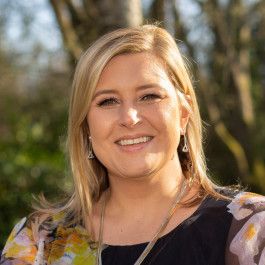
Ellie Dix
A teacher and educationalist, and former co-owner and director of Pivotal Education, Ellie Dix has been obsessed with board games from an early age. Ellie firmly believes that board games have positively influenced her ability to solve problems, manage failure and experiment with multiple paths to success ' and she now puts her teaching skills, understanding of behaviour and experience with gamification to use by helping parents to introduce board games to family life.
Hear Ellie talk about her book below and visit Ellie's You Tube channel to find out more about her work.
Fortunes, not Feuds: 7 essential tips for playing board games with family'
13 ways playing board games benefits your child'
The Parenting Show Episode 141
Click here to read Ellie Dix’s blog.
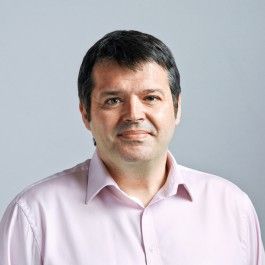
Paul Dix
As a teacher, leader and teacher trainer, Paul Dix has been working to transform the most difficult behaviour in the most challenging urban schools, referral units and colleges for the last 25 years. In addition to working directly with schools, Paul has advised the Department for Education on the Teachers' Standards, given evidence to the Education Select Committee and done extensive work with the Ministry of Justice on behaviour and restraint in youth custody. Paul is a leading campaigner for the #BanTheBooths campaign (www.banthebooths.co.uk) and is a member of both the IntegratEd Reference Group and the Ethical Leadership Group.
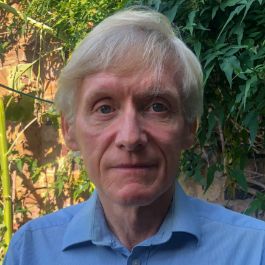
David Dixon
Dr David Dixon was a full-time primary teacher for 15 years before becoming a head teacher for the following two decades. In that time, he promoted the twin causes of environmental education and sustainability, which formed the central ethos of his schools. David is now a freelance education consultant, specialising in curriculum and leadership and helping individual schools to link sustainability with school improvement more generally.
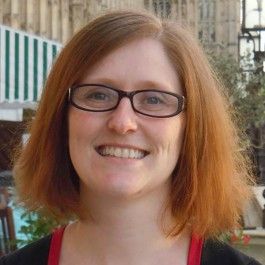
Eleanor Dommett
Dr Eleanor Dommett is a Senior Lecturer in Biological Psychology and Neuroscience at the Institute of Psychology, Psychiatry and Neuroscience, part of King's College London. Her research focuses on models of Attention Deficit Hyperactivity Disorder and mechanisms of action of therapeutic drugs in this condition. She has conducted research at Sheffield University, Oxford University and the Open University and has taught at a variety of institutions. She is currently teaching on the BSc Psychology at King's and has a special interest in technology-enhanced learning.
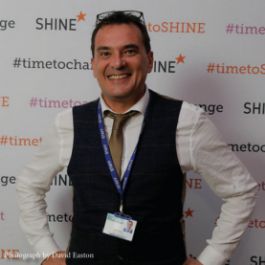
Chris Dyson
Chris Dyson was the proud head teacher of Parklands Primary School in Seacroft, Leeds for over eight years. Having been raised in a single-parent household, receiving free school clothes and free school meals himself, Chris' connection between his early life and that of Parklands’ pupils is rooted in common experience. He is now Deputy CEO at Create Partnership Trust, and believes that education is the key to making the future brighter.
Marlene E Hunter
Marlene E. Hunter, MD is a family physician who began to work with highly dissociative patients in 1977. She is a Certificant and Fellow of the College of Family Physicians of Canada and a past Associate Clinical Professor at the University of British Columbia in the Department of Family Medicine. She is a past president of the American Society of Clinical Hypnosis, the Canadian Society of Clinical Hypnosis (B.C. Division) and the B.C. College of Family Physicians.
Read more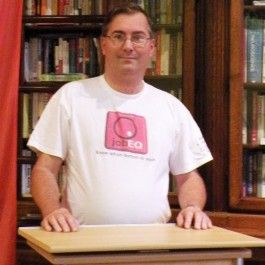
Patrick E Merlevede
Patrick Merlevede is an internationally recognised specialist in the areas of talent management and emotional intelligence. Based on his own experience in these fields, he founded jobEQ.com, a cloud based service providing tools for assessing work attitude & motivation, values & organizational cultures and competencies. At the time of writing, jobEQ's tools were available in 18 languages and were being used by consultants, trainers and coaches in over 30 countries.
As trainer, modeller and author he was the first to make the link between Neuro-Linguistic Programming (NLP) and emotional intelligence. The result of the integration of these 2 fields has been written down in 7 Steps to Emotional Intelligence (2001).
Mastering Mentoring & Coaching with Emotional Intelligence (2004) focuses on upgrading mentoring and coaching approaches with concepts from NLP, emotional intelligence as well as the tools developed by jobEQ.
More recently he contributed a chapter to Innovations in NLP for Challenging Times (2011), outlining jobEQ's framework.
In 2014 he wrote Talent Management: A Focus on Excellence - Managing Human Resources in a Knowledge Economy. This book is based on the experience of jobEQ's customers, covering applications such as recruiting & assessment, training & coaching, team building & leadership and changing organizational cultures (see http://bit.ly/TMbookjobEQ).
Patrick continues to consult organizations in these areas, and coaches an international network of consultants and trainers who use the jobEQ principles and tools. He can be contacted through www.jobEQ.com
For more information, see the professional profile on LinkedIn.
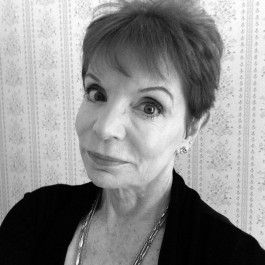
Judith E. Pearson PhD
Dr Judy Pearson is a free spirit, pursuing all the things she loves to do. After decades of working as a project manager, employee assistance program provider, and a psychotherapist, today she is an author, freelance writer and copy editor, She has published four books (three with Crown House Publishing Ltd.) and over 200 articles, reviews, and interviews in magazines, newsletters and blogs.
She is currently a co-editor for the Trafalgar Chronicle, the international research journal of The 1805 Club; copyeditor for the online International Journal of Naval History of the Naval Historical Society, Washington, D.C., and a frequent contributor to the newsletter for the Naval Order of the United States. She works privately with non-fiction authors to edit and refine their manuscripts and with publishers to edit galley proofs.